


Welcome. We know a lung cancer diagnosis is overwhelming. XpertPatient provides unique resources that help achieve the best treatment results possible.
A personalized experience lets you understand your or your loved one’s lung cancer diagnosis type & stage. Only on XpertPatient, you can compare FDA-approved lung cancer treatments side-by-side. For example, stage 4 lung cancer immunotherapy vs chemotherapy.
Lung Cancer ICD 10 is C34.90 for insurance purposes.
 10 Minutes On XpertPatient Can Change Your Life
- Less treatment side effects
- Help paying for treatment & care
- Less anxiety for you & your family
- Better treatment results for you
Must See Resources

Financial Assistance For Cancer Patients
Access financial support from drug makers & non-profits
Find Payment Help
See Top Cancer Hospitals
Find a top cancer hospital near you for the best care possible
Search Top Cancer HospitalsMost Viewed Pages

Nurse Recommended
What Is Lung Cancer
Lung cancer is a disease when cells in the lungs grow out of control. There are two types of lung cancer: non-small cell lung cancer (NSCLC) and small cell lung cancer (SCLC). Non small cell lung cancer is more common than small cell lung cancer.
Lung Cancer Diagnosis
Lung Chest X-ray – Lung cancer X-rays are often used to detect lung tumors or masses. This chest scan for lung cancer is not a definitive indicator of cancer but it can provide early warning signs.
Lung CT Scan (Computed Tomography) – A Lung CT scan generates more detailed images of the lungs in cross-section. This lung cancer test is often used to determine the size and extent of tumors.
Lung PET Scan (Positron Emission Tomography) – A PET scan determines where the most cancer cells are and whether the cancer has spread.
Bronchoscopy – During a bronchoscopy, a thin, camera-equipped tube is passed through the lungs to check the respiratory tract for signs of cancer. Additionally, a biopsy may be carried out during this procedure.
Lung Cancer Biopsy – A lung cancer biopsy is performed to confirm the presence of cancer cells in the probable tumor.
Stages of Lung Cancer
Lung cancer stages identify the extent to which the cancer has spread. For Small Cell Lung Cancer (SCLC) there are two stages: Limited disease (tumor on one side of the lung) and Extensive disease (affecting both lungs).
Non-small cell lung cancer consists of stages 1 to 4. Stage 1 (tumors to one lung). Stage 2 (affects nearby lymph nodes). Stage 3 lung cancer (spread to other lungs). Stage 4 lung cancer metastasis (spread to distant organs).
Lung Cancer Prognosis
Lung cancer has a poor prognosis; over half of people diagnosed with lung cancer die within one year of diagnosis and the 5-year survival is less than 18%.
Small cell lung cancer prognosis. This varies depends upon the stage of the cancer, the treatment response, and the health of the patient. If detected early, the small cell lung cancer survival rate is higher, while if detected late, the chances of recovery are lower.
Non small cell lung cancer prognosis. Non-small cell lung cancer (NSCLC) accounts for the majority of all lung cancer cases. The prognosis of NSCLC is dependent on the tumor, node, if it has spread, and the overall health of the patient.
Lung Cancer Treatments
The type, stage, and extent of lung cancer you have, along with your overall health, will determine what type and level of lung cancer treatment you receive.
Lung Cancer Surgery
Lung cancer surgery is a treatment used to combat tumors at an early stage of non-small cell lung cancer as well as later stages. This is also the most common treatment for small cell lung cancer.
Radiation Therapy for Lung Cancer (Radiotherapy)
Radiation treatment for lung cancer is an X-ray-based treatment that kills or damages cancer cells and is often administered along with surgery or chemotherapy.
Chemotherapy for Lung Cancer
Chemotherapy is a common treatment for lung cancer. It uses drugs to stop the growth of cancer cells, either by killing the cells or by stopping them from dividing. This drug is effective against both small-cell and non-small-cell lung cancer.
Chemotherapy for non-small cell lung cancer is usually systemic, meaning it is injected into a vein or given by mouth. When given this way, the drugs enter the bloodstream to reach cancer cells throughout the body.
Immunotherapy for Lung Cancer
Immunotherapy for lung cancer is a type of therapy that stimulates the body’s own immune system to help the body fight the cancer.
Targeted Therapy for Lung Cancer
Targeted therapy uses drugs or other substances to identify and attack specific cancer cells. Your doctor may suggest biomarker tests to help predict your response to certain targeted therapy drugs.
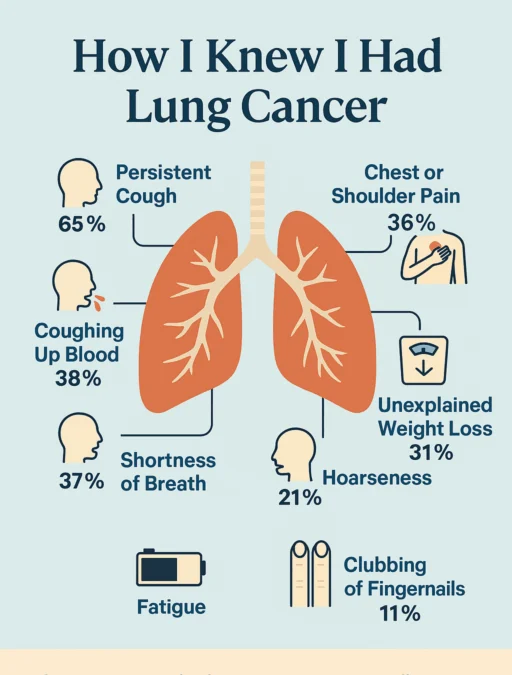
How I Knew I Had Lung Cancer
Many patients share online how they knew they had lung cancer. According to the National Institute of Health, there are signs and symptoms that typically indicate that lung cancer may be present. If you have one or more of the following symptoms for an extended period of time, consult with a Dr. immediately.

Lung Cancer Survival Rate 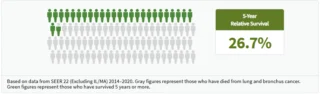 26.7%
26.7%
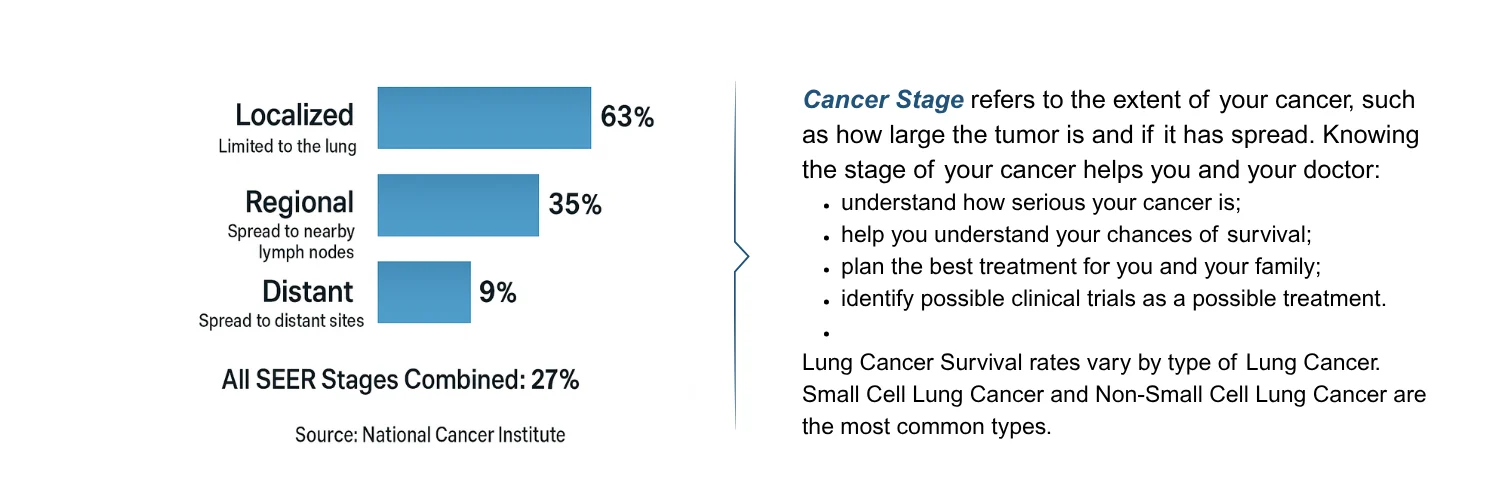
Community Recommended Resources

Cancer Anxiety
Coping with Cancer
Just as cancer affects your physical health, it can bring up a wide range of feelings you’re not used to dealing with or make existing feelings seem more intense. They may even change minute to minute. This is true whether you are going through a cancer treatment, between treatment cycles or done with your cancer treatment. These feelings are all normal.
Try to find ways to relax. Many people turn to friends, family, counselors or their faith to help them cope. Exercise and relaxation techniques as well. Each of us are very different so take some time and figure out what works for you.
Your Cancer Care Team
Your Cancer Care Team
- MEDICAL ONCOLOGIST: A doctor who has special training in diagnosing and treating cancer in adults using chemotherapy, hormonal therapy, biological therapy, and targeted therapy.
- SURGICAL ONCOLOGIST: Doctor who uses surgery to remove tumors.
- RADIATION ONCOLOGIST: Doctor who prescribes radiation therapy (beams of high-energy radiation, or radioactive seed implants) to shrink or eliminate tumors
- NURSE: Seen more than anyone, your nurses will provide medical care, answer questions, offer hope and suggest ways to talk with family and friends about your feelings.
- PATHOLOGIST: Doctor who has special training in identifying diseases by studying cells and tissues under a microscope.
- ONCOLOGY NURSE: Specializes in treating and caring for people who have cancer.
- PATIENT NAVIGATOR: Patient or health educators help you and your family learn more about your cancer by finding information that fits your needs
We Know You’re Tired but Keep Exercising!
Exercise Benefits Cancer Patients
Exercise and Cancer
Recent studies show evidence that exercise after a cancer diagnosis is associated with boosting your mood. Exercising can also help you better cope with side effects and for some support longer survival.
Talk to your doctors about an exercise routine that is right for you even if it’s as simple as walking around your living room. You can also take a look at the latest studies from the National Institute of Health here:

Kathryn Schmitz,
Ph.D., M.P.H.,
Penn State College
of Medicine
10 Must Know Terms
10 Must Know Terms
- BIOPSY: Removal & examination of cells or tissue to determine if you have cancer or the amount of cancer in your body.
- BIOMARKER TESTING: A way to look for genes, proteins, and/or substances that can provide information about your specific cancer. This testing will help you & your dr. choose the best cancer treatment for you.
- LOCALIZED CANCER: Your cancer is still only found “locally” or within the organ where the cancer began.
- METASTATIC CANCER: Your cancer has spread from the place where it started to other places in your body.
- RADIATION THERAPY: A treatment that uses high doses of radiation to kill cancer cells and shrink tumors.
- CHEMOTHERAPY: A treatment that uses drugs to stop the growth of cancer cells, either by killing the cells or by stopping them from dividing.
- IMMUNOTHERAPY: A treatment that uses your own immune system to help the body fight cancer, infection, and other diseases.
- TARGETED THERAPY: A treatment that identifies and attacks specific types of cancer cells with less harm to normal cells then other treatments typically resulting in less side effects.
- INTRAVENOUS (IV): Most common type of infusion; used to put fluids, including cancer drugs directly into your bloodstream.
- SIDE EFFECTS: Secondary, typically undesirable, effects of a drug treatment affecting healthy tissues or organs
Who Can I Call With My Questions?

If you have any Cancer Diagnosis or Cancer Treatment related questions, you can call the National Cancer Institute’s Information Service Line to speak with a cancer specialist.
Service is available in English and Spanish – Call Mon – Fri, 9 a.m. – 9 p.m. ET 1-800-422-6237 or click Here to CHAT Now.
Paying for Your Treatment

You are not alone. Most people with cancer have a hard time paying for treatment and everything else they need to pay for while they are going through treatment.
CancerCare makes it easy to find payment help for both treatment and the bills that show up every month such as rent, childcare, transportation, and even food if needed.
Please visit CancerCare today to find the resources you need.
Our Sponsors and Collaborators
XpertPatient’s mission to advance cancer patient education and empower newly diagnosed cancer patients has been made possible through the support and contribution of our sponsors and collaborators, including the following:




Sponsored content allows us to bring support to other patients like you.
Cancer is overwhelming. We'll help you get “cancer smart” fast.
XpertPatient’s team is committed to helping those new to cancer understand their cancer diagnosis, the differences between their latest cancer treatment options as well as what questions to ask. All of our content has been curated and refined for easier understanding, collaboration and sharing.
The original source for all diagnosis-related content is Cancer.gov. The original source for all treatment-related content is the NCCN Guidelines. Preferred Category 1 and 2A treatment options can be compared.

An award-winning customer experience expert, 2x cancer caregiver and health innovator, Risa launched XpertPatient.com to better education & empower patients & caregivers early on in their cancer journey, something proven to drive better outcomes.
Everyone asks “how is XpertPatient different?” While all of the latest research shows that better-educated & involved patients experience less anxiety, less treatment side-effects; and ultimately achieve better outcomes*, more than 1/2 of them won’t feel confident having treatment option conversations with their doctors. At XpertPatient we are on a mission to change that. To build an army of active health consumers.

A dynamic visionary focused on innovative and high-impact responses to significant societal issues, Carolyn plays a critical role in identifying critical cancer education needs, trusted third party resources and gaps in patient and caregiver care needs many serving as the foundation for the unique services delivered by XpertPatient.com.
“XpertPatient provides a critical resource by delivering unbiased treatment information and discussion guides patients can use to have more substantive conversations with their care providers. Surfacing information needed to make informed decisions is a critical step to achieving the best possible outcomes.”
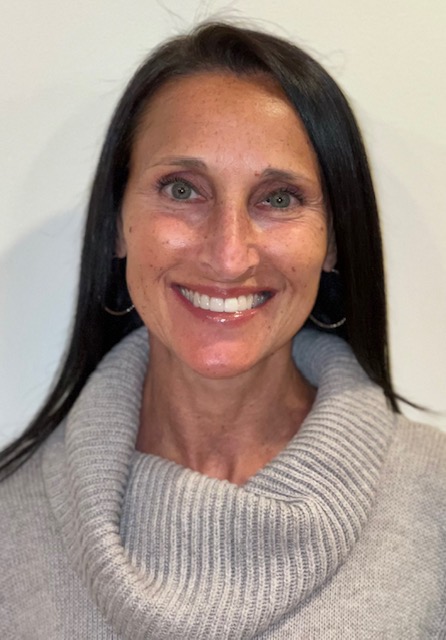
As a seasoned cancer patient navigator, Shari is a critical member of XpertPatient’s Customer Experience Team working to ensure the content and services we deliver reflect the most urgent needs of families on a cancer journey, both big and small and wherever possible offer personalized guidance that support patients receiving the best possible care.
“XpertPatient is a comprehensive website that provides easy to read materials on a variety of cancer diagnosis including treatment options, financial resources, and side effect management. The “Compare My Treatment Options Now” tool is a wonderful resource for patients to better understand their options and have more informed, educated discussions with their physicians.”

A seasoned medical oncologist with experience working in both community practice and hospital settings spanning 2 different countries, Dr. Leonora leads our medical content team to deliver complex cancer-related content into easy to understand terms that resonate with our broad range of site visitors.
As a core member of our Customer Experience team, Leonora ensures we are always delivering an experience that is up to date as new cancer treatments are approved, medically accurate & 100% patient-centric.

If an annoying cyst on my hand hadn’t interfered with my normal daily routine, I might not have discovered that I had late-stage lung cancer. What was even more frightening was when my oncologist told me that the 5-year survival rate was at most 15%.
Well, it’s only now, after more than 8 years since my diagnosis, that I’m able to relax a bit and just live my life including to help launch XpertPatient.com. Creating a truly patient-centric experience has been one of the most incredible things I’ve done since my diagnosis. Knowing that my insights and experience are helping other cancer survivors through their journey is definitely rewarding.

A skilled Hematology/Oncology Nurse Practitioner at a leading US Cancer Center, Stefania serves as XpertPatient’s medical lead for all blood cancer related cancer center content (e.g, Leukemia, Multiple Myeloma). Collaborating with the Experience Team, Stefania leads diagnosis and treatment content development, resource identification and video selection for new patients and caregivers.
“XpertPatient is a comprehensive website that provides easy to understand information about diagnosis and treatment. As a provider, what I most like about it is that it empowers patients to take ownership of their care by becoming well-informed and being an active member of their care team.”

Dr. Feiler brings the XpertPatient Experience Team expertise and insights having been both a seasoned medical professional that successfully managed the needs of a highly diverse patient and caregiver population and a cancer caregiver.
Her in-practice and personal experiences have helped to break down complex medical terms into simple, easy to understand content, central to the success of the XpertPatient.com experience.
As an on-going advisor, Dr. Feiler guides content direction and ensures accuracy of language.

As XpertPatient’s CRO, my goal is to identify sponsors looking for a game-changing partner to drive business growth while positively impacting those on a cancer journey. Throughout my career, I have been passionate about building digital health media platforms that elevate health literacy and empower individuals to take charge of their well-being.
With experience leading companies including Healthline & Health Media Network, I have transformed emerging organizations into market leaders, providing people on their health journeys with access to trusted information.
Today, there is no greater urgency than assisting families in navigating cancer. I am thrilled to be part of the XpertPatient leadership team and committed to our mission of making a meaningful impact every day.

As the Strategic Partnership & Content Strategy Lead for XpertPatient, I am responsible for delivering a game changing experience trusted by new patients & caregivers, 100% endorsed by advocacy and a strategic partner to oncology brands working to reach & engage hard to reach audiences.
Before joining XpertPatient, I was the interim CMO at ArmourUp for Life, a not-for-profit foundation that helps cancer patients in underserved communities, improve patient outcomes throughout their health and wellness journey. Using storytelling to amplify Loriana’s powerful voice for advocacy we launched “STAGE FREE,” a podcast for cancer survivors and caregivers.
From my perspective, XpertPatient represents an untapped opportunity for the industry and the community it serves. I couldn’t be more excited to be a part of this exciting brand.

Hear From Patients & Caregivers
Deb Bowler, Mom, Thriver, Stage 3 Lung Cancer Diagnosis.
Debra Bowler, Mom, Thriver. Stage 3 Lung Cancer: “XpertPatient takes that fear of the unknown away and explains things in simple language, exactly what you have, your treatment options, and what you can expect.”
Get Started Now"Out of all of the sites I looked at, XpertPatient.com is the only site that really gave me hope"
“There is a lot of information out there. And not all of it is great. For stressed caregivers, it’s really hard.
But out of all of the sites I looked at, XpertPatient.com is the only site that really gave me hope”
Get Started Now